
Gynecologic Surgery
Gynecological surgery treats pathologies affecting the female genitals, such as the vagina, vulva, uterus or breasts.
We have set up a technical platform with state-of-the-art tools and a team of gynecologist surgeons to manage the different pathologies of women, namely :
-
Urinary incontinence
-
Urogenital prolapsus
-
Endometriosis
-
Treatment of fibroids
-
Resection of the synechia
-
The uterine malformations
Gynecological surgery is more and more MINI INVASIVE and coelioscopic type, This promotes the reduction of scars and a very fast post-operative recovery.
Types of surgery in gynecology
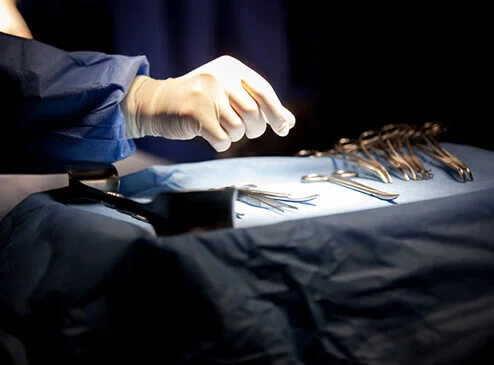
THE REMOVAL OF UTERUS: HYSTERECTOMY
Hysterectomy is an intervention that involves the removal of the uterus if it carries fibroids that greatly hinder the patient by pain and/or bleeding. This radical solution is often proposed for patients who no longer wish to have children.
Hysterectomy is also proposed for the treatment of cervical, endometrial and certain forms of ovarian cancer.
How’s the surgery going ?
It can be carried out by :
-
The natural ways, which leaves no apparent scar.
-
Coelioscopy, through the wall of the abdomen (without scars)
-
Laparotomy
Is this a painful procedure ?
Thanks to a powerful analgesic treatment (Lyrica®) the suites are generally comfortable. With current surgical techniques, the procedure is no longer known to be very painful.

The Myomectomy
It is the surgical removal of uterine fibroids, leaving the uterus in place, and is done by: Coelioscopy or Abdominal
What is a fibroid ?
Fibroids are benign tumours that develop in the lining of the uterus.
In the majority of cases, fibroids do not cause any discomfort, no symptoms, so they remain “silent" until menopause.
In other cases, they can lead to heavy periods, bleeding between periods, pain in the lower abdomen, more frequent urination, difficulties in being pregnant or special risks for pregnancy.
How can fibroids be treated ?
The decision to choose a treatment depends on many factors: the importance of symptoms, the number and location of fibroids, the desire for pregnancy, age, etc.
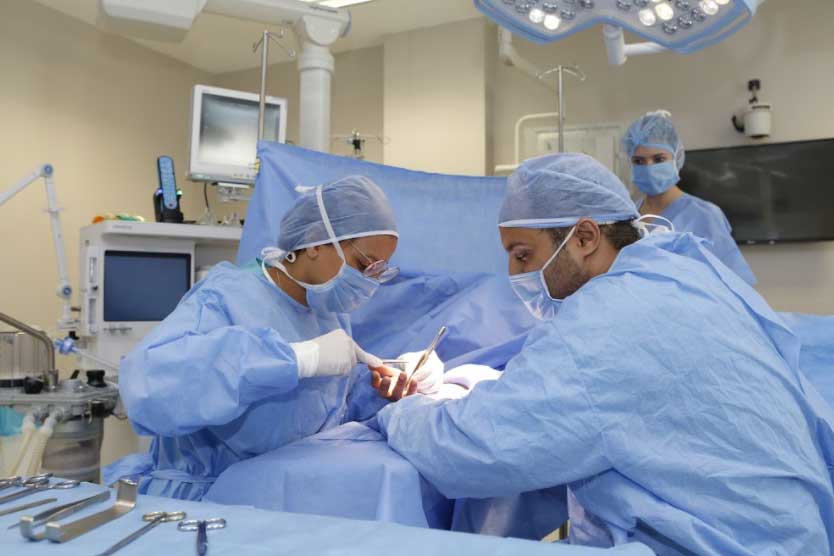
THE COELIOSCOPY
It is a surgical technique that allows to operate inside the belly by making only small incisions. This technique is preferred from surgery inside the abdomen.
How is a Coelioscopy performed ?
Under general anesthesia and from small incisions on the skin, one passes through the wall of the tubes.
Through these tubes, we can pass all kinds of instruments:
-
A camera that allows you to see on a screen what is inside the belly
-
Scissors, pliers, needle holders, spreaders
What is the difference between diagnostic and surgical coelioscopy?
Diagnostic coelioscopy makes it possible to look for an undetectable abnormality by other means.
As its name indicates, this procedure is only diagnostic.
Surgical coelioscopy is used in particular for the treatment of :
-
An Extra-uterine pregnancy
-
A Cyst of the ovary
-
An Endometriosis
Why is coelioscopy preferred today to the classic opening of the belly?
-
Aesthetic advantage
-
Precision of the gesture
-
Less painful procedure
-
More simple operating procedures
-
More limited infectious risks

HYSTEROSCOPY
Hysteroscopy is exploring the interior of the uterus using an endoscope.
The uterine cavity is dilated with physiological serum.
Diagnostic hysteroscopy
It makes it possible to visualize the uterine cavity and take samples. The small size of the device used makes it possible most often to perform this examination without anesthesia.
You can follow the exam on a control screen. Hysteroscope is introduced by natural means, without speculum. There’s no point in fasting. The exam lasts less than 10 minutes. A removal of the mucosa can be performed.
The surgical hysteroscopy
It is a surgical procedure, allowing to operate the abnormalities located inside the uterus (polyps, fibroids, adhesions called synechias, mucosal abnormalities, malformations, etc.) using tiny instruments.
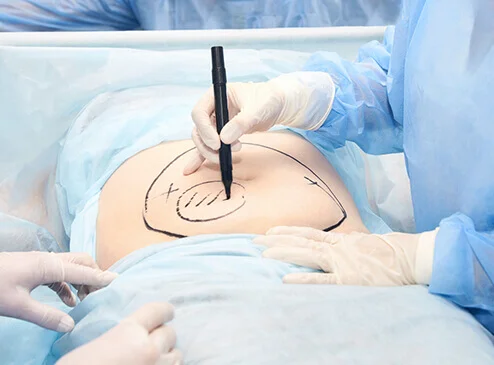
ORGAN DESCENT SURGERY
(PROLAPSE CURE)
Hysterectomy is a procedure that consists of removing the uterus if it is a carrier of fibroids that greatly bother the patient by pain and / or bleeding. Often, this radical solution is proposed, in patients who no longer wish to have children.
Also, hysterectomy is proposed for the treatment of cervical cancers, endometrial cancers and some forms of ovarian cancers.
What is a descent organ ?
A genital prolapse (or descent of organs) is an abnormal downward displacement of one or more organs in the pelvis. There are several kinds of organ descent depending on the organ(s) affected.
What are the causes of an organ descent?
It is favored by births by natural means and certain personal predispositions. But also everything that leads to a significant increase in pressure in the abdomen (and tends to push the organs out of the abdomen): jobs where you carry heavy and often constipation…
What are the operating techniques?
Three pathways can be used first: by opening the abdomen (“laparotomy”), by coelioscopy and through the vagina (“vaginal pathway”). In some cases, prostheses can be used.